
When Should an LLC Elect S-Corporation Status?
Written by Steve Madsen, CPA (licensed since 1993), founder of Madsen and Company and a tax planning advisor for business owners.
Many small business owners ask when an LLC should elect S-Corporation status to reduce taxes. The timing of this election can significantly affect how business income is taxed, how owners pay themselves, and how much profit they ultimately keep after taxes. Understanding the right time to elect S-Corp status is an important part of proactive tax planning for profitable businesses.
An LLC can elect to be taxed as an S-Corporation by filing IRS Form 2553, but making that election only makes sense when the business has reached a level of profitability where the tax savings outweigh the additional complexity.
The IRS explains the election process in Form 2553, Election by a Small Business Corporation, which allows eligible businesses to choose S-Corporation tax treatment.
Understanding when an LLC should elect S-Corporation status can help business owners reduce self-employment taxes while staying compliant with IRS rules.
Quick Answer
An LLC should usually consider electing S-Corporation tax status once the business consistently generates enough profit to pay the owner a reasonable salary and still leave additional profit available as distributions.
For many businesses, this often begins when net profits reach roughly $50,000 to $80,000 or more, although the exact threshold depends on the owner’s role, industry, and payroll requirements.
When structured properly, an S-Corporation can help reduce self-employment taxes while maintaining the legal flexibility of an LLC.
Typical Profit Levels Where S-Corp Elections Are Considered
| Annual Profit | Typical Recommendation |
|---|---|
| Under $40,000 | Usually too early for S-Corp |
| $50,000 – $80,000 | May begin evaluating S-Corp |
| $80,000 – $150,000 | Often strong tax savings |
| $150,000+ | S-Corp frequently beneficial |
What an S-Corporation Election Actually Does
Electing S-Corporation status does not change the legal structure of the company. The business remains an LLC.
Instead, the election changes how the business is taxed.
Without an S-Corp election, an LLC owner typically pays self-employment tax on all net business income.
With an S-Corporation election:
- The owner must take reasonable W-2 wages
- Remaining profits may be taken as distributions
- Distributions are generally not subject to self-employment tax
This difference is why S-Corporations are often used as a tax planning strategy for profitable small businesses.
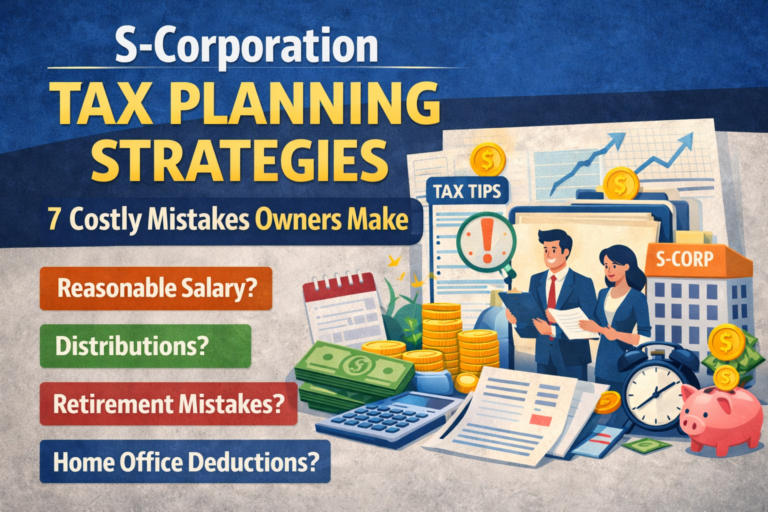
If you want a deeper explanation of how this works, see our guide to S-Corporation tax planning strategies.
Signs Your LLC May Be Ready for an S-Corporation Election
Many business owners hear about S-Corporations early in their business journey, but electing too early can create unnecessary payroll and compliance costs.
Here are common indicators that an S-Corporation election may make sense.
1. Your Business Is Consistently Profitable
S-Corporations work best when a business generates steady profits beyond the owner’s salary.
If the business is barely breaking even, the tax savings may not justify the additional complexity.
Once profits consistently exceed the amount needed to pay the owner a reasonable salary, the S-Corp structure may start producing meaningful tax savings.
2. You Can Pay Yourself a Reasonable Salary
The IRS requires S-Corporation owners who actively work in their business to take reasonable W-2 compensation.
Reasonable salary depends on several factors, including:
- Industry pay levels
- Job responsibilities
- Experience and qualifications
- Time spent working in the business
If salary is set too low, the IRS may reclassify distributions as wages, creating back payroll taxes and penalties.
You can learn more in our guide on how to calculate reasonable S-Corporation salary.
3. Your Profits Are High Enough to Offset Payroll Costs
Running an S-Corporation requires additional administrative steps, including:
- Payroll processing
- Quarterly payroll tax filings
- Annual W-2 reporting
- Additional accounting complexity
Because of these requirements, most CPAs recommend waiting until profits are high enough to offset payroll administration costs.
For many businesses, this occurs when profits exceed $60,000 to $100,000 annually, though the optimal timing varies.
Example
For example, if a business earns $120,000 in annual profit and the owner pays themselves a reasonable salary of $70,000, the remaining $50,000 may be distributed without self-employment tax. In situations like this, an S-Corporation election can create meaningful tax savings.
4. You Want a More Strategic Tax Planning Structure
S-Corporations are frequently used as part of proactive tax planning for business owners.
Beyond reducing self-employment taxes, S-Corporations can affect:
- Retirement contributions
- Health insurance deductions
- State tax planning
- Long-term business strategy
This is why many business owners evaluate S-Corporation elections as part of a broader business tax planning strategy rather than as a one-time decision.
When Should an LLC Elect S-Corp Status Based on Profit?
Business owners in Utah often evaluate S-Corp elections once profits reach consistent levels.
When an LLC Should NOT Elect S-Corporation Status
Although S-Corporations can provide meaningful tax savings, they are not the right choice for every business.
Situations where the election may not make sense include:
Low or Unstable Profits
If profits fluctuate widely or remain low, payroll requirements can eliminate any potential tax savings.
Part-Time or Side Businesses
Businesses that generate occasional income may not benefit from the additional compliance requirements.
Early-Stage Startups
New businesses often experience unpredictable income during their first years. In many cases, it makes sense to wait until the business reaches consistent profitability before considering the election.
When to File the S-Corporation Election
To elect S-Corporation status, the business must file IRS Form 2553.
The deadline is typically:
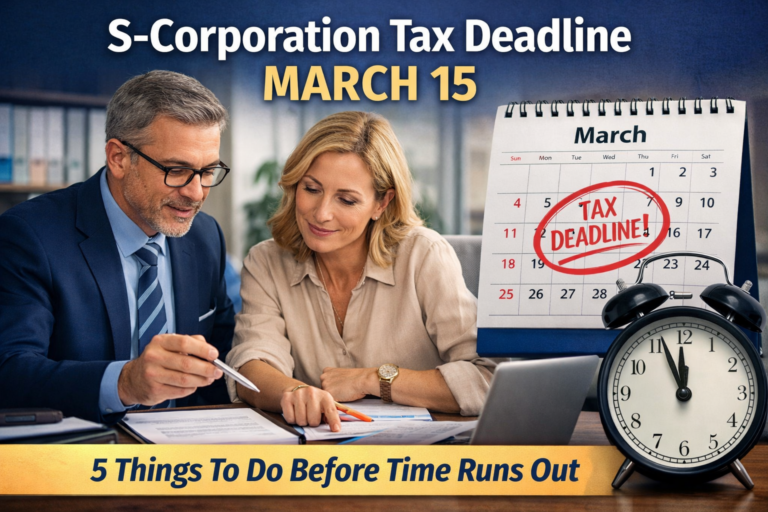
March 15 of the year the election should take effect.
However, many businesses that miss this deadline may still qualify for late election relief.
If you missed the deadline, read our guide on what to do if you missed the S-Corporation election deadline.
Common S-Corporation Mistakes Business Owners Make
Many business owners elect S-Corporation status without understanding the full requirements.
Common mistakes include:
- Not paying reasonable owner salary
- Ignoring payroll tax compliance
- Mixing personal and business finances
- Electing S-Corp status before profits justify it
Working with a CPA who focuses on proactive tax planning can help business owners avoid these problems.
CPA Insight
Many business owners hear about S-Corporations as a way to reduce taxes, but the real question is not whether an S-Corp saves taxes — it is whether it saves taxes after accounting for payroll, compliance, and reasonable salary requirements.
How S-Corporation Elections Fit Into Proactive Tax Planning
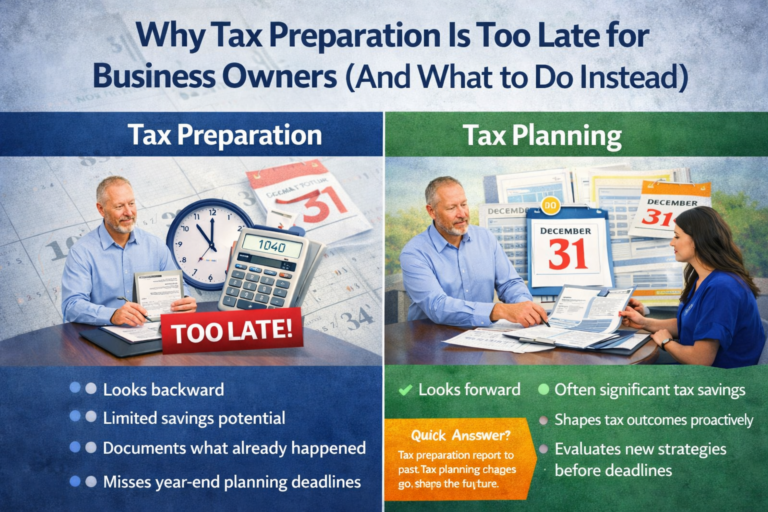
Many business owners believe taxes are reduced when the tax return is prepared. In reality, most tax-saving decisions must be made before the end of the year.
An S-Corporation election is one example of a strategy that should be evaluated as part of ongoing tax planning, not just during filing season.
When used correctly, the structure can:
- Reduce self-employment taxes
- Improve owner compensation strategy
- Support retirement planning
- Create a more structured financial strategy for the business
Business owners in Utah often evaluate S-Corp elections once profits reach consistent levels.
Work With a Planning-First CPA
Choosing whether and when to elect S-Corporation status is an important tax decision for business owners.
At Madsen and Company, we help entrepreneurs evaluate whether the S-Corp structure actually makes sense for their situation.
Our approach focuses on year-round tax planning, not just tax preparation. By evaluating income levels, compensation strategy, and long-term business goals, we help business owners make informed decisions that reduce taxes and improve financial clarity.
If you are considering an S-Corporation election or want a second opinion on your current structure, professional guidance can make a meaningful difference.
Many business owners in South Jordan, Utah and throughout Salt Lake County evaluate S-Corporation elections once their business reaches consistent profitability. Local tax planning can be especially important because federal and state tax considerations may both affect the decision.
Business owners across Utah often review their entity structure once their companies become profitable enough for proactive tax planning strategies.
Talk With a CPA Before Electing S-Corporation Status
Schedule a tax planning consultation with Madsen and Company to evaluate whether an S-Corporation election makes sense for your business.
Electing S-Corporation status can reduce taxes for the right business, but making the election too early or structuring it incorrectly can create payroll issues, IRS scrutiny, or unnecessary complexity.
At Madsen and Company, we help business owners evaluate whether the S-Corp structure actually produces real tax savings.
If your LLC is becoming more profitable, now may be the right time to review your structure.
Frequently Asked Questions
What is the main tax benefit of an S-Corporation?
The primary benefit is the potential reduction in self-employment taxes. S-Corporation owners must pay themselves reasonable wages, but additional profits can often be distributed without self-employment tax.
At what income level does an S-Corporation make sense?
Many CPAs begin evaluating S-Corporation elections when a business generates $50,000 to $80,000 in annual profits, although the exact threshold varies depending on payroll costs and owner salary.
Can a single-member LLC elect S-Corporation status?
Yes. A single-member LLC can elect S-Corporation tax treatment by filing IRS Form 2553.
Does electing S-Corporation status change the legal structure of the business?
No. The business remains an LLC legally. The election only changes how the business is taxed.
Can you switch back after electing S-Corporation status?
Yes, although there may be restrictions on when another election can be made. Businesses should evaluate the decision carefully before making the change.
How much can an S-Corporation save in taxes?
The potential tax savings from an S-Corporation depend on the business owner’s reasonable salary and total profit. In many cases, profitable businesses may reduce self-employment taxes on a portion of profits taken as distributions, which can sometimes produce several thousand dollars in annual tax savings.
When should you NOT elect S-Corporation status?
Electing S-Corporation status may not make sense if a business has low profits, unstable income, or operates as a part-time side business. Because S-Corporations require payroll processing, tax filings, and additional compliance, the tax savings must outweigh the added administrative costs.